
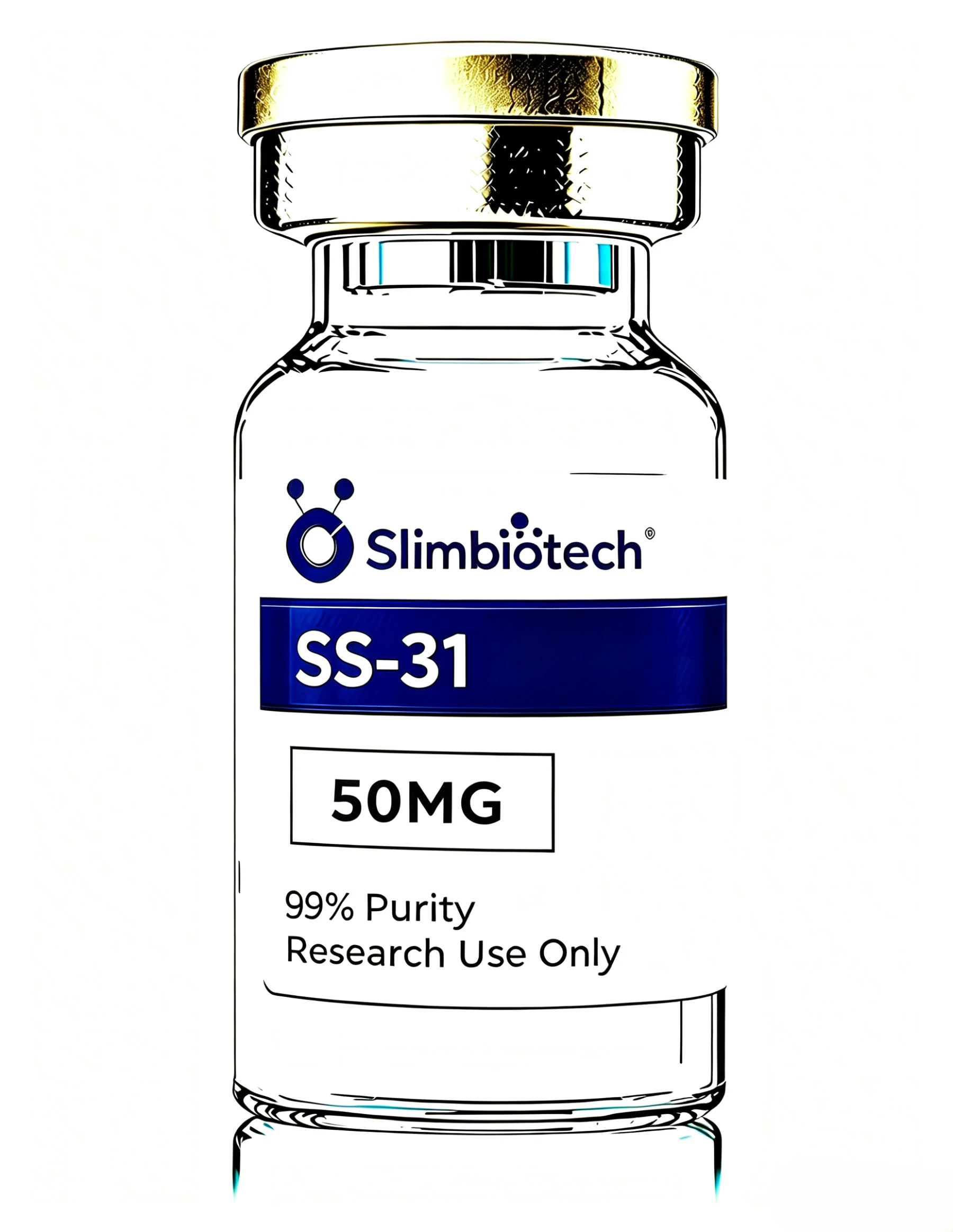
SS-31 -1kits (10Vials)
$80.00
You’re now subscribed to price tracking for this product. We’ll notify you if the price drops.
Fast Delivery
Quick, reliable shipping to any location.
Free & easy returns
Return this item by mail or in store within 90 days for a full refund.

SS-31 (Elamipretide / Bendavia / MTP‑131) – Detailed Introduction & Benefits Basic Introduction SS‑31 (generic name: Elamipretide ) is a synthetic, mitochondria‑targeted tetrapeptide (4 amino acids) developed by Szeto and Schiller (Szeto–Schiller peptide, SS peptide). Sequence : D‑Arg‑Dmt‑Lys‑Phe‑NH₂ (Dmt = 2′,6′‑dimethyltyrosine) Molecular weight : 639.8 g/mol Other names : Bendavia, MTP‑131 Key feature : Selectively accumulates ~1,000–5,000‑fold in the inner mitochondrial membrane (IMM) versus cytoplasm, without needing energy or receptors. Solubility : Water‑soluble, stable in solution, resistant to peptidase degradation. Clinical stage : Multiple Phase 3 trials ; FDA accelerated approval in 2025 for certain mitochondrial disorders. Mechanism of Action Targets & binds cardiolipin (a unique IMM phospholipid critical for electron transport chain (ETC) function). Stabilizes ETC structure :Optimizes electron flow, boosts ATP synthesis , and blocks ROS production at the source (unlike traditional antioxidants that only scavenge existing free radicals). Prevents oxidative damage :Inhibits cardiolipin peroxidation, maintains mitochondrial membrane potential (ΔΨm), and blocks cytochrome c release (anti‑apoptotic). Restores mitochondrial cristae :Improves structure and function of damaged/aged mitochondria. Supports mitochondrial biogenesis :May promote new mitochondria formation. Main Benefits 1. Mitochondrial Protection & Energy Boost Increases ATP production :Enhances oxidative phosphorylation, raises cellular energy levels. Reduces ROS & oxidative stress :Lowers free radical damage, protects DNA, proteins, and lipids. Preserves membrane potential :Maintains mitochondrial integrity under stress or aging. 2. Anti‑Aging & Longevity Reduces cellular senescence :Delays age‑related decline in organ function. Improves tissue regeneration :Enhances repair of aged/damaged cells and organs. Extends healthspan :Supports youthful metabolism and physical resilience. 3. Cardiac Health Improves heart failure symptoms :Enhances cardiac output and exercise tolerance. Protects cardiomyocytes :Reduces ischemia/reperfusion injury and fibrosis. Supports heart function in aging :Prevents age‑related cardiac decline. 4. Physical Performance & Recovery Boosts endurance :Increases exercise capacity and oxygen utilization. Reduces muscle fatigue :Lowers lactate buildup and improves recovery time. Speeds injury repair :Accelerates recovery from muscle, tendon, and joint damage. 5. Cognitive & Neurological Support Crosses blood‑brain barrier (BBB) :Directly protects brain mitochondria. Enhances cognitive function :Supports memory, focus, and mental clarity. Neuroprotective :Reduces risk of age‑related neurodegeneration (e.g., Alzheimer’s). 6. Organ Protection Kidney :Improves glomerular structure, reduces fibrosis, protects against age‑related kidney disease. Liver :Supports detoxification and reduces oxidative injury. Eyes :Beneficial for age‑related macular degeneration (AMD) and retinal atrophy. 7. Metabolic Health Supports fat loss :Enhances mitochondrial fat oxidation and metabolic efficiency. Improves insulin sensitivity :Helps regulate blood glucose and reduce diabetes risk. Key Advantages Over Traditional Antioxidants Targets the source : Prevents ROS production at the ETC, not just scavenges after damage. Mitochondria‑specific : No off‑target effects on healthy cells. Clinically validated : Over 150 peer‑reviewed studies and multiple Phase 3 trials. Common Uses Longevity & anti‑aging Mitochondrial dysfunction support Heart health & recovery Athletic performance & muscle repair Cognitive enhancement & neuroprotection Kidney, liver, and eye health support